Book Puppy Playtime Today! Book Puppy Playtime Today! Book Puppy Playtime Today!

Ways to Make the Holidays Safer for Pets

As the holidays approach we think about nice family dinners, festive music, and holiday cheer. It is a time of year like nothing else and there seems to be a unique peace in the air. What many dog owners do not realize is it is also a risky time of the year for our fur-legged friends. Not because Santa will scare them when he comes down the chimney, but because of very common items in our home that come out this month.

People food

Let’s start off by talking about food. During the holidays we often have get-togethers and share meals much larger than an average dinner. Many foods that we will enjoy should not be eaten by our fur-legged friends. Below is a list of foods that are the most dangerous for dogs to eat.

  • Rich, fatty foods.
  • Meats that have bones in them
  • Onions and garlic
  • Chocolate
  • Alcoholic beverages
  • Raisins/grapes
  • Nuts
  • Milk Products

Potpourri and Candles

Although potpourri and candles look and smell great, they can make your fur-legged friend sick should he use them as a treat. Candles are also a fire hazard should your dog knock one over that is lit. Always keep items such as these well out of your dog’s reach. If these items are on a counter or table take into consideration that your dog still may be able to reach them. Playing safe than sorry as to wear you leave these items is also recommended.

Holiday Plants and Flowers

A very popular item found during the holiday season is decorative plants such as holly and mistletoe. Many plants and flowers can cause your dog to become very sick if digested. Dogs are always curious to try a new “food” and certain items such as these can cause your dog harm. Be sure to place these items in an area that your dog is unable to reach. We often place flowers near a window for sunlight which is also an area your dog has access to.

Tinsel On Your Christmas Tree

While tinsel isn’t “poisonous” per se, it’s extremely dangerous to your dog should he consume it. Swallowing tinsel can lead to internal issues as well as basic choking issues for your dog. Tinsel is generally shiny which catches your dog’s attention and may be too much for him to resist. Many dog owners do not even bring this item into their homes as a precaution. If you must decorate with tinsel, keep it in an area completely out of reach of your dog or you may be spending Christmas morning at the veterinarian, not unwrapping gifts from Santa!

Secure Your Christmas Tree

You can’t really blame this one on your pup. Afterall, they wake up one morning and magically there is a seven-foot pine tree in their living room! As beautiful as this tree looks, it does cause a safety hazard. Dogs are naturally attracted to trees and tend to want to hide under and behind them. It does not take much for a Christmas tree to topple over which could injure your pup or anyone near it when it falls. This can also result in damaging the decorations on the tree which can be very costly. By taking a few minutes to properly secure your tree can end up saving you a lot of problems in the end.
Safe Haven for Your Dog

If you intend to have a holiday party which involves a lot of people, consider putting your dog in a room dedicated just for him away from the commotion. The room should have water and food and you should periodically check on your pup. A soft blanket or dog bed would also be a nice fixture in the room while he hangs out there. Although some dogs want to party as much as grandma does, some tend to get quickly get scared of the noise and want to be left alone. You know your dog better than anyone and should determine this before the party begins. This is also a wise decision if your dog is a runner because the front door may be opened and closed dozens of times which would allow for him to escape.
Puppy Teeth Stages: What You Need to Know

Like children, puppies go through several stages of development before they grow up, and one of these stages is teething. Puppy teething is your puppy’s process when baby (milk) teeth fall out and their permanent (adult) teeth settle in.

Puppy teething stages are just like human ones.

Puppies start out with 28 milk teeth (also called baby teeth), and these teeth fall out over time while their permanent teeth erupt. Once your puppy matures into an adult dog, it will have 42 adult teeth.

Now, teething is no accessible business, and it can be painful or irritating for most puppies, and this leads to chewing on anything your puppy gets their chompers on. Nothing is spared from your furbaby’s teeth: furniture, shoes, and toes!

We know your puppy’s teething habits can be annoying, but we promise it’s only temporary! In this blog, we help you understand what your puppy is going through with a quick timeline of your puppy’s teething stages.

2 to 4 weeks old

When your puppy is 2 to 4 weeks old, they depend heavily on its mother and breeder for its well-being. Whether it’s food, warmth, or comfort, your furry friend will only have their mother and caretaker for all their needs.

Along with being blind, their milk teeth are just starting to come in. Don’t worry about your puppy’s teeth during this age period.

5 to 6 Weeks Old

At 5 to 6 weeks old, your puppy should have 28 baby teeth. Your furry friend is also weaned or in the process of weaning.

Weaning is a transitional stage in a puppy’s development, in which it switches from drinking its mother’s milk to eating solid food. Your pup’s breeder is the main person who will help your puppy undergo the weaning process.

12 to 16 Weeks Old

During the 12 to 16-week period, your puppy is independent and ready to go to its new home.

At Furry Babies, we get our puppies at 8 weeks old, to give them some time to adjust with us and their new environment and also to help them form an independent relationship with us.

We also ensure that every puppy receives adequate dental care from a licensed veterinarian before they go home with their new owners. Once your puppy is home with you, you may notice little teeth around your home. Don’t panic!

Like human children, your puppy is shedding their baby teeth so that its permanent teeth settle in. According to The SprucePets, your puppy’s teeth should start falling out at around 8 weeks.

Of course, the teething process is excruciating for your little fur ball. They may start to chew on everything they can sink their teeth into.

Make sure you give your puppy chew toys, puzzle games, or Kong toys to prevent potential destruction of your property. It would help if you also visited the vet to ensure your puppy’s teeth and mouth are okay.

Additionally, your puppy is old enough to start a consistent dental routine. Take your time with the process. Instead, start with the basics.

Hold your puppy near you and open their mouth, touching the outside and in. This helps your puppy grow used to having its mouth opened and touched when brushing its teeth.

Avoid getting nipped or bitten by your furbaby. The teeth are razor-sharp, so if your fingers get caught, this can hurt!

6 Months and Beyond

When your puppy reaches 6 months, all its permanent teeth should have settled in. All dogs have around 42 adult teeth, though this may vary with some breeds.

It’s essential to check that your puppy has no milk teeth left. If left untreated, your puppy’s baby teeth can cause dental problems such as overcrowding and malformation. Your vet will assess your puppy’s mouth and remove any extra baby teeth.

Now that your puppy has adult teeth, it’s your responsibility to keep them pearly white and healthy. We know it’s common for dog owners to forget about their furry friend’s dental health, but we recommend maintaining a routine.

Dogs cannot take care of their teeth, leading to the buildup of plaque and other debris. Without proper dental care, this plaque can develop into tartar, which causes bad breath, dental disease, and even organ damage.

Brushing your puppy’s teeth regularly prevents numerous medical issues that can harm them. As a precaution, ensure the toothpaste you use for your puppy is designed for dogs.

Human toothpaste can make your puppy sick if they swallow it. It would help if you also used a dog toothbrush to brush the corners and outer edges of your puppy’s teeth.

Don’t take it to heart if your puppy bites at your toes or fingers. Teething often causes sore gums, and the only way puppies can alleviate their pain is by chewing everything in sight! Be patient and offer alternatives for your puppy’s comfort.

Remember the tips above when you start your pup’s dental care. Never leave your puppy alone during their early teething stages unless you want a mess inside your house.

If you need to leave, place your puppy in its crate to prevent them from chewing and getting into mischief while you are away.

Also, remember to have fun with your puppy! It’s a frustrating experience for both of you, but there are plenty of ways to make the process less stressful.

For example, establish a dental care routine early on, and this routine can become a bonding experience for both of you. When you understand your puppy’s teeth stages, you’ll be able to help your furry friend make that critical leap from puppyhood to adulthood.

So pack up on chew toys and love your puppy without boundaries so that you can have years of unconditional love and friendship!

Puppy Accidents and How to Clean Them

Accidents happen… All puppies, from time to time, don’t make it outside before they do their business. If your puppy, like most, has an accident indoors, don’t overstress. It is important, though, to realize that indoor puppy accidents can cause your carpet and furniture to smell or even be destroyed. The key is to cleanse the area as soon as possible. This is important for two reasons. The first is because the waste left on the carpet or furniture can absorb into the fibers which makes removing the odor very difficult. The second is because once these odors remain, regardless of how slight, your four-legged friend may return to the same area and relieve himself there again.

How to Prevent Indoor Accidents

Being consistent with your puppy’s potty-training routine is key. Also, providing your puppy with ample outdoor potty time is essential. For those who work all day, considering a daytime pet sitter to stop over and allow your puppy a potty break also will help the issue. Using positive reinforcement is always more effective than using discipline in this process.

How to Get Urine Odors Out of a Carpet

Dog urine gets absorbed into the carpet as an acid that causes damage to the carpet’s fibers. Upon the urine drying up, it results in an alkaline residue. If urine salts are not cleaned with a professional pet cleaning product, this may result in a foul urine smell building up over time. Absorbing the wet urine with a dry rag, followed by washing the infected area, will help to remove the urine and smell. At times, this process may need to be completed two or more times.

How to Get the Urine Smell Out of a Couch?

If your pup had an accident on your couch, professional cleaning products should be used to cleanse the area. After the couch is cleansed, keep your puppy away from it until the area is complete and the odor is completely gone. Dogs tend to remark the same spot over and over and detect this area by smelling where they previously went.

At Home Cleaning Products

Did you know that you can naturally clean pet stains and odors using commonly found items in your pantry? Ingredients such as baking soda, vinegar, hydrogen peroxide, vodka, orange, lemon, and salt to clean pet urine work well. You can neutralize and clean surfaces by using a combination of these products. The issue with using a synthetic cleaner on a carpet is that it can damage and remove its color and add unnecessary toxic chemicals to your home. By utilizing more natural ingredients, especially things like enzymatic cleaners with essential oils, pet owners can keep their homes safe from the buildup of harmful fumes and chemicals that can make their pets sick.

Before Using Any Cleaning Product

Before applying any cleaning solution, you should always test it on a small area of your rug or furniture to ensure it won’t do any damage. Once the ingredients demonstrate that they are working and not causing damage, be sure to cleanse the area with a copious amount of the product and thoroughly scrub the infected area. Dog urine can be very difficult to clean fully and, if not removed, can cause more issues down the road. Regardless of what products you use, all puppy owners need to remember that their puppies are still learning and want to make you happy. Being patient, using positive reinforcement, and taking the time to train your four-legged friend right will yield positive long-term results.

Type of Service Dogs

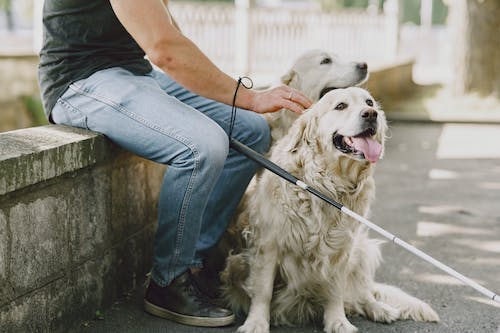
Service dogs are well-trained professional dogs that help to those who need them. Each service dog has a specific set of skills that require training and testing to master. Service dogs perform impressive tasks such as leading the blind, assisting with day-to-day tasks, and providing comfort and companionship. Actual service dogs are backed and protected by the Americans with Disabilities Act.

Some of the most common services provided by service dogs include:

• Guide Dogs
• Autism Service Dogs
• PTSD Service Dogs
• Hearing Dogs
• Medical Alert Dogs
• Diabetic Alert Dogs
• Seizure Response Dogs
• Allergy Detection Dogs
• Mobility Assistance Dogs
• Medical Alert Dogs

There are other types of service dogs, and if you have a condition that is not listed above, you may still be able to apply for a service dog.

Common Breeds of Service Dogs

Although service dogs come in all shapes, sizes, and breeds, the following list of dog breeds tends to be the most common. These breeds generally have very caring and outgoing demeanors with outstanding personalities. They also tend to train with ease and enjoy companionship. Most service dogs show little to no signs of aggression and have very warm and approachable demeanors.

Labrador Retriever – A very smart and personable breed of dog that has a loving and outgoing personality.


German Shepherd – A loyal and alert dog who enjoys the company of his family. This breed loves outdoor activity time.


Golden Retriever – A loving and gentle breed of dog who is exceptional in all family shapes and sizes. This breed also does well with other pets in the home.


Poodle – This breed is considered the most intelligent breed of dog in existence. They train with ease and enjoy and thrive off of human interaction.


Bernese Mountain Dog – An alert and active dog that is known to quickly bond with his family. They train with ease and are eager to please.


Great Dane – A large and loving dog that is known for its loyalty and caring personality. They tend to make great service dogs, especially for those who suffer from PTSD and anxiety.


Saint Bernard – By nature, this breed is a service dog. They have a long history of helping mankind and generally have very protective and loyal personalities.


Pomeranian – Small and lovable. This breed of dog does well in smaller homes. This breed is patient and caring and very loyal to its family. They specialize in a variety of service dog tasks.


Boxer – This breed is alert and loyal and enjoys assisting his human counterpart. They are smart and agile dogs with great personalities.


Border Collie – A very loving and caring dog that tends to stick by your side. This breed is also smart, which makes training easy. They are eager to please and tend to be happy when you are. They also tend to do well in households that have children.

Is it Mandatory to Register Service Dogs?

No. Registering a service dog is not required in the United States under law, but it is suggested. Doing so it will help to eliminate any confusion or restrictions you may run into in the future. Unfortunately, there has been a rise in fake service dogs, which is why it is essential to make sure you and your dog are adequately protected. Properly being registered will make things easier. Many private businesses have rules against non-service animals entering their establishment, which is a primary reason to have your service dog registered.

Where Can You Register a Service Dog?

There are a few organizations that offer service dog registration. These organizations will require that you describe your disability and or need, what tasks your dog is capable of offering, and the specific training your dog completed. These options include websites such as Service Dog Certification, United States Dog Registry, and USA Service Dog Registration.

Service dogs have made a positive impact over the years and have validated the expression “man’s best friend.” Through proper training and care, the services that these amazing dogs are able to provide continue to get better and better. Doing the appropriate research before getting a service dog will help you find the best breed for your specific needs.

Top Dog Training Collars

Training your dog is essential for many reasons and is something that all dog owners need to focus on, beginning when their dog is a puppy. A properly trained dog will be easier to live with and will help keep him and your family safe. Positive reinforcement training techniques tend to yield the best long-term results, and one of the tools many dog owners rely on is training collars. Training collars can assist in getting your dog comfortable with the feeling of wearing a collar and help gently correct habits and/or improper behavior. The question many dog owners ask is, what type of collar will my dog do best with?

What Types of Collars Are There?

Standard Dog Collar: A standard dog collar, also known as a buckle collar, is one of the most common types of training collars used. These collars are used on dogs of all shapes and sizes and are easy to put on and adjust. Although they are not as corrective as other dog collars, they are easily deployed and will prevent your dog from feeling choked while they are using them to walk with you.

Choke Collar: A choke collar is a very common training collar used to catch your dog’s attention when they are initially learning how to walk on a leash. This type of collar is designed to tighten when your dog pulls on the lead, which will cause a degree of discomfort until they stop pulling. After a few walks with this collar, your pup will learn to walk with you, not away from you.

Martingale Collar: A martingale collar is considered a choke collar; however, much more of a gentle one. These collars are basically a combination of a buckle collar and slip lead, as they have a second loop on the collar that will tighten as a dog pulls. The loop, however, will only allow the collar to tighten slightly, so it will not apply the same pressure on your dog as a routine choke collar or slip lead. The tightness applied to their neck is generally enough to gain their attention and compliance.

Prong Collar: A prong collar is used to control dogs that have a greater physical force and or pull. Generally, this type of collar is used on dogs who continue to pull or run and ignore the effects of a standard or choke collar. A prong collar consists of metal links that face inward on the collar, coming in contact with your dog’s neck. When the dog pulls or runs, pressure is applied by these prongs, which will move close together, creating a pinch around the dog’s neck. The pinch is generally enough to catch your dog’s attention and slow down or stop his excessive pulling. It should be noted that these collars should only be used by those who have experience using them. They are recommended only after other basic collars have proven ineffective.

Shock Collar: A shock collar is a training collar that delivers a light shock or vibration to the dog’s neck when the owner activates it. These collars come with a small wireless remote control that the owner holds, allowing them to send a signal to the collar when the dog is acting inappropriately. The goal behind this type of collar is to teach your dog that a certain behavior will result in an annoying and or uncomfortable sensation. If you are trying to teach your dog not to run after people, and when he does, he feels this uncomfortable sensation, he will correlate the behavior to it. In time the dog will typically stop the undesired behavior without even receiving the sensation.

Dog Collar

A Collar Is Just a Tool

Dog owners need to remember that a training collar is just a tool they have in helping to train their dogs. Proper dog training takes time and effort. In many instances, we are trying to teach our dogs certain things that are against their own instincts. Dogs naturally like to chase things and run free. Although collars, when utilized correctly, will help to train a dog, consistent positive reinforcement is very important. Some dog breeds tend to train more quickly than others and will require less strenuous training. Being patient, caring, and remembering that this takes time will help make the training process easier for you and your dog.

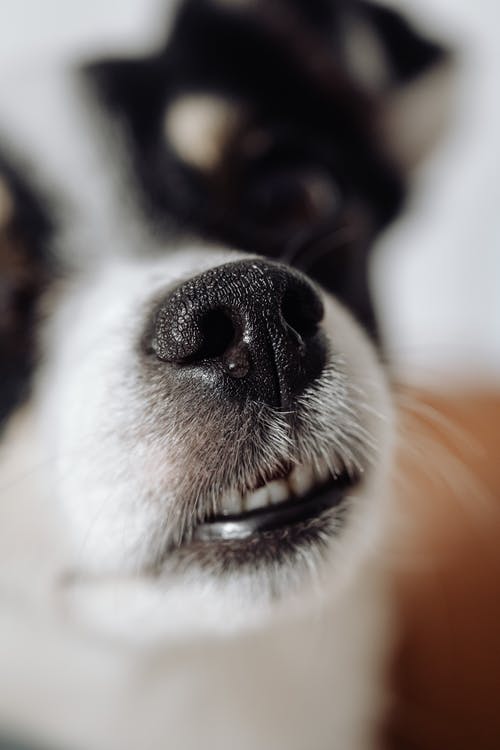
Your Dog’s Amazing Nose

No matter what breed of dog you have, there is one common quality they all share. Their incredible sense of smell! Their ability to pick up on even the faintest scents has allowed for their survival for hundreds if not thousands of years. It has also allowed them to be utilized to assist humankind in tracking and retrieving game, locating missing people, detecting diseases in people, and finding illegal substances, such as narcotics.

How Sensitive Is Their Nose?

Animal care specialists and dog owner, Jen Eleao, explained that a dog’s sense of smell is somewhere between 25,000 to 100,000 times more acute than ours. This is due to our fur-legged friends having up to 100 million sensory receptor sites in their nasal cavity compared to six million receptors in people. The area of the canine brain devoted to analyzing scents is about forty times larger than the equal part of the human brain. “Our dogs are full-blown scent detection machines,” Eleao explains, “which is why they are capable of tracking even the faintest scent for miles.”

How Their Scent Detection Works.

Unlike humans who inhale and exhale at different times, a sniffing dog’s nose is designed to allow air to travel in and out at the same time, creating a continuous circulation of air. By keeping a continuous flow of air entering their nose, they are capable of maintaining a steady track of what they are looking for. A dog’s nasal cavity is divided into two separate chambers and opens into two nostrils that move independently, and that can take in smells separately. As a dog sniffs a scent, particles and compounds are trapped in the nasal cavity while the dog’s scent receptors process them. Part of the inhaled air goes to olfactory analysis, and some of it goes to the lungs to breathe. As a dog exhales, fresh air enters the nose through the slits in their nose, which maintains a steady stream of air and odors flowing.

Best Scent Tracking Breeds

Although all dog breeds are scent specialists, some are better than others. As an example, Eleao explained, although any dog can track the scent of common foods, such as poultry, hound breed dogs have the overall best sense of smell and are able to track just about anything that gives off a scent. Hound dogs rely on their ears almost as much as they rely on their noses. As they smell the scent on the ground, their ears are used to move the air in front of their nose and essentially lift the scent. Smaller dogs such as the French Bulldog and Pug that have short faces may have compromised airways that could affect their overall sense of smell.

Frequently Asked Questions

Question: How Far Can A Dog Smell Something That Is Traveling Through The Air?

Answer: Generally, most dogs are able to detect scents in the air that originated several miles away. One study showed that some dogs could smell something (with the right airflow) more than ten miles away. A dog smelling something several miles away is comparable to a person smelling a juicy hamburger or chicken cutlet being grilled one block away.

Question: What Does It Mean When People Say Dog Smells In 3D?

Answer: The same way a human uses two eyes to obtain two different views on what they are looking at, which allows our brain to form a 3D image, dogs use both nostrils to create a 3D view of a scent. This allows a dog to determine precisely where objects are located that are giving off a scent.

Question: Are Dogs Used In The Medical Field To Detect Diseases?

Answer: Numerous studies have shown that trained dogs are able to detect a variety of diseases, including lung, breast, ovarian, bladder, and prostate cancers within the human body. There are current studies taking place to determine if dogs are also capable of detecting Covid-19.

Why Are Dogs’ Noses Wet?

A dog’s nose contains special glands that secrete a layer of mucus in the inner lining of it. The wet lining creates particles in the air to stick to it, which allows the dog to not lose track of the scent.

Your Dog’s Amazing Nose

No matter what breed of dog you have, there is one common quality they all share. Their incredible sense of smell! Their ability to pick up on even the faintest scents has allowed for their survival for hundreds if not thousands of years. It has also allowed them to be utilized to assist humankind in tracking and retrieving game, locating missing people, detecting diseases in people, and finding illegal substances, such as narcotics.

How Sensitive Is Their Nose?

Animal care specialists and dog owner, Jen Eleao, explained that a dog’s sense of smell is somewhere between 25,000 to 100,000 times more acute than ours. This is due to our fur-legged friends having up to 100 million sensory receptor sites in their nasal cavity compared to six million receptors in people. The area of the canine brain devoted to analyzing scents is about forty times larger than the equal part of the human brain. “Our dogs are full-blown scent detection machines,” Eleao explains, “which is why they are capable of tracking even the faintest scent for miles.”

How Their Scent Detection Works.

Unlike humans who inhale and exhale at different times, a sniffing dog’s nose is designed to allow air to travel in and out at the same time, creating a continuous circulation of air. By keeping a continuous flow of air entering their nose, they are capable of maintaining a steady track of what they are looking for. A dog’s nasal cavity is divided into two separate chambers and opens into two nostrils that move independently, and that can take in smells separately. As a dog sniffs a scent, particles and compounds are trapped in the nasal cavity while the dog’s scent receptors process them. Part of the inhaled air goes to olfactory analysis, and some of it goes to the lungs to breathe. As a dog exhales, fresh air enters the nose through the slits in their nose, which maintains a steady stream of air and odors flowing.

Best Scent Tracking Breeds

Although all dog breeds are scent specialists, some are better than others. As an example, Eleao explained, although any dog can track the scent of common foods, such as poultry, hound breed dogs have the overall best sense of smell and are able to track just about anything that gives off a scent. Hound dogs rely on their ears almost as much as they rely on their noses. As they smell the scent on the ground, their ears are used to move the air in front of their nose and essentially lift the scent. Smaller dogs such as the French Bulldog and Pug that have short faces may have compromised airways that could affect their overall sense of smell.

Frequently Asked Questions

Question: How Far Can A Dog Smell Something That Is Traveling Through The Air?

Answer: Generally, most dogs are able to detect scents in the air that originated several miles away. One study showed that some dogs could smell something (with the right airflow) more than ten miles away. A dog smelling something several miles away is comparable to a person smelling a juicy hamburger or chicken cutlet being grilled one block away.

Question: What Does It Mean When People Say Dog Smells In 3D?

Answer: The same way a human uses two eyes to obtain two different views on what they are looking at, which allows our brain to form a 3D image, dogs use both nostrils to create a 3D view of a scent. This allows a dog to determine precisely where objects are located that are giving off a scent.

Question: Are Dogs Used In The Medical Field To Detect Diseases?

Answer: Numerous studies have shown that trained dogs are able to detect a variety of diseases, including lung, breast, ovarian, bladder, and prostate cancers within the human body. There are current studies taking place to determine if dogs are also capable of detecting Covid-19.

Why Are Dogs’ Noses Wet?

A dog’s nose contains special glands that secrete a layer of mucus in the inner lining of it. The wet lining creates particles in the air to stick to it, which allows the dog to not lose track of the scent.

How To Stop Your Fur-Legged Friend from Barking at Strangers

We love our dogs a lot as they provide us with a lot of joy, but excessive barking can be very difficult to handle, especially on a daily basis. Many dogs will naturally begin to bark when they see someone they do not recognize. Although this is a good thing in some instances, in most, it is unnecessary and annoying. The repeated sound of a barking dog will also eventually annoy neighbors and could land you in hot water with your local authorities. So how do you teach your dog not to bark at strangers?

Why do dogs bark at people they do not know?

First, let’s look at why dogs bark at people in general. The most common reasons are:

General excitement bark: Simply said, dogs are excited to see and interact with new people! Most dogs are very social creatures, and when approached by someone new, they are eager to meet and interact with them. To determine if the barking is excited-based, look at their tail. A highly energetic and wagging tail typically means a happy and excited dog.

Territorial bark: Many dogs are territorial of their home, property, and family. Some dogs view a stranger as someone who is not authorized to be at their home and or as a potential threat to the family living there. The territorial bark is used to warn the stranger to stay away. It is also used to alert the dog’s family that a possible intruder is approaching for safety.

Lack of socialization bark: Dogs that have not been raised in social environments tend not to know what to do when a new face is observed. Barking is a natural reaction in dogs, and this behavior may take place by default. Allow your dog to socialize with other people and pets, which will help him to better accept new people. Fear bark: Your dog may have just been alarmed! Even dogs that are properly socialized and who are not overly territorial can be alarmed and begin to bark. Dogs are designed, for the most part, to be alert and to guard. This can happen to even the most laidback pup, who will bark when scared.

How To Stop The Unwanted Behavior

Do not overreact to their barking. Dogs that bark for attention know their barking is effective when they get a reaction from their human family. Like a child who acts a certain way when he or she needs attention, dogs do too. Limiting your reaction will allow your pup to see that his barking will not result in any attention.

Walk Away

When you walk away from a dog, he recognizes there is no reward. When he barks at someone and you walk away, he may begin to associate the excessive barking with something he should not do. Paying too much attention to the negative behavior may end up making it worse.

Distracting Them

On the flip side, some dogs need a distraction in order to take away their focus on what is causing them to bark. If your dog begins to bark, simply distract them with noise. This can be accomplished by shaking your keys, slapping your hands, whistling, or using one of his favorite squeaky toys. If this is effective, he should be rewarded, which will associate positive behavior with a reward.

Need To Remember You should not forget that your dog is a dog. Dogs do bark and do get excited for various reasons. It is in their DNA! Being patient with your dog is needed in all instances. Although excessive barking can be a nuisance, keeping cool and not overreacting is a great first step in managing it. Your dog can tell when you are stressed, so a calm and patient demeanor with him is what will yield the best results.

How To Handle Broken Nails on Our Puppies

Our pups love to play and, at times, can play hard. A very common injury for our pups is a split or broken toenail. These can cause pain and great discomfort to our fur-legged friends, and knowing what to do when this happens is very important. Although a very simple injury, it is one that should be treated quickly and properly.

What Causes Dogs’ Nails to Break?

Dogs have a total of nine toes. Five toes on their front paws and four on their back paws. Their nails grow throughout their entire life and often require trimming to keep them at a comfortable length. Overgrown toenails on dogs can cause discomfort since they are in constant contact with the ground they walk on. We need to remember that they are not just walking on a soft carpet. Outdoor terrain can be hard and rough, which can cause their nails to break and or split. Imagine how you would feel running around outside without shoes on.

Why are a Dog’s Broken Nails Problematic?

Our pup’s toenails should always be taken seriously, as damaged toenails can lead to greater health issues. The injury is not only painful but can limit their mobility and quality of life. Inside their nails are clusters of nerves and blood vessels. An untreated broken toenail can lead to an infection that is capable of spreading into the dog’s leg, which will require much greater medical care. This is one of the main reasons why tending to his toenails is so important.

Nails

How To Treat A Broken a Nail

When in doubt, contacting your veterinarian is always recommended. If you treat the injured toenail at home, you should initially restrain your dog in a way that allows you to safely examine the injured toenail. This will help prevent you from being bit and or scratched and will make the process safer and easier. Your pup will be in pain and most likely not want you near the injured paw. If your dog’s nail is bleeding and he will allow you to touch the area, begin to address the bleeding by applying light pressure to the area. Keep the light pressure applied for several minutes and until the bleeding stops. After the bleeding is under control, apply an anti-bacterial ointment or cleansing solution to the injured area. Bleeding that does not stop after fifteen minutes should be looked at by a veterinarian. After the area is properly cleaned, allow it to air dry. Applying a bandage over the area may not allow it to dry out as desired and is a potential safety hazard should your dog try and chew the bandage. If you happen to observe a small section of the nail hanging from the area, you can attempt to remove it yourself by carefully trimming it. This should only be done if your dog is tolerating the pain and relaxed enough to allow you to. After doing so, let your dog time to relax before allowing him to run free, especially outside.

How Long Does It Take a Dog to Fully Recover from A Broken Toenail? Although all dogs are different and all injuries vary, generally speaking, your dog will need about two weeks before his nail is completely back to normal. You should start seeing improvement within the first 48 to 72 hours. This will greatly depend on how quickly you treated the injury, the overall extent of the injury, and if your dog did not reinjure it before it began to heal. Remembering to use anti-bacterial ointments or cleansing solutions as soon as possible also helps to prevent the area from becoming infected, which can certainly set back your pup’s recovery time.

Is Your Dog Getting Enough Exercise?

As the saying goes, an object in motion stays in motion. That could not be any truer when it comes to our dogs. Exercise is a key ingredient in keeping our pups looking and feeling their best. There are many ways for our fur-ever friends to get their daily amount of required exercise.

Indoor Versus Outdoor Activities

Exercise is exercise. The key is keeping your pup moving which helps to speed up his heart rate, use all of his muscles and burn calories. Most pups enjoy the smells and looks of nature but on certain days (heavy rain, lots of snow, or extremely hot weather) indoor activities can be just as fun and beneficial.

Basic Outdoor Activities

The most common basic outdoor activities include a brisk walk, a fun game of fetch, or play wrestling with your dog. Dogs love human interaction and when fun is mixed into it allows for a better experience. It also provides a very good bonding experience which dogs naturally tend to seek.

Basic Indoor Activities

Some fun basic indoor activities include tug-of-war, hide and seek, and learning new tricks. Although these types of activities are not as active as outdoor activities, they will still allow your four-legged friend to burn extra energy and keep mentally alert. Remember, activity time is not just to stay physically fit, but mentally sharp too.

How Many Minutes A Day Should I Spend Exercising With My Dog?

Although every dog is different, one thing most people agree on is each dog should be on the move for at least thirty minutes a day. Certain breeds, like Retrievers, Spaniels, Collies, Pointers, and German Shepherds require more activity time than breeds such as the Bulldog, Basset Hound, Shih Tzu, Pug, and Chihuahua. Although each breed is different, thirty minutes a day is a relatively good goal to strive for. If your dog seeks more playtime, go for it!

Dog Exercise

Frequently Asked Questions

How Do I Know If My Dog Reached His Activity Limit?

It is normal for dogs to pant while running and playing but this is a sign they are getting tired. Watch your pup’s tail. Is it wagging or straight down while he’s playing? A wagging tail is generally a sign that your dog is content, comfortable, and happy. Consider breaking the play time up into intervals and allow your pup to sit or lay down for a few minutes every fifteen minutes or so. This will also give you a small break to catch your breath too!

Will My Dog Overheat?

Heat exhaustion certainly is something that every dog owner needs to watch for. The most telling symptom of heat stroke in a dog is excessive panting. Other common symptoms may include general signs of discomfort, excessive drooling, reddened gums, vomiting, diarrhea, mental dullness or loss of consciousness, uncoordinated movement, and collapse. Should your pup ever reach this level immediate medical care is needed. The key, however, is to monitor your dog while outside playing before he begins to overheat.

What Can I Do to Keep My Dog Feeling Good During Activity Time?

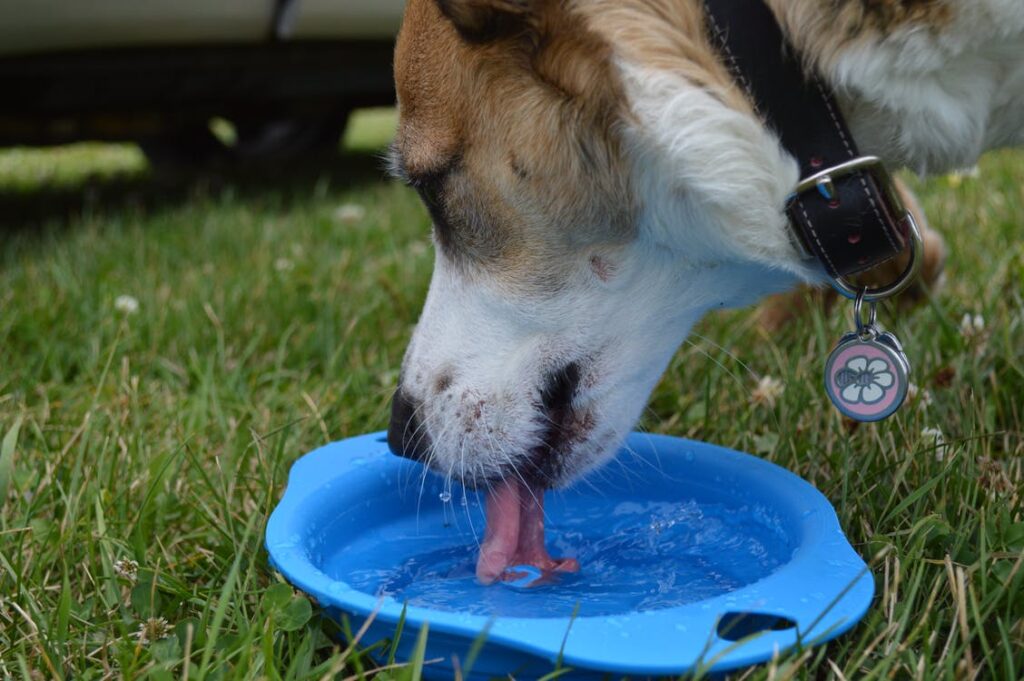
Fresh water! Water is essential as it hydrates your dog and helps to keep him cool. Although providing him with water during activity time is very important, making sure he is properly hydrated before and during activity, time is also necessary. Don’t wait for your pup to show signs of dehydration before giving him a refreshing bowl of water.

Is Activity Time in Cold Weather Safe?

Outdoor activity time in the cold is safe, however, proper precautions should be taken. A very overlooked aspect of this has to do with what we focus on in the warm months, hydration. During the cold winter months, the humidity levels in the atmosphere are much lower. With the lower humidity, your dog can easily become dehydrated if he or she is not drinking enough water. Keeping your dog bundled up, preferably with an insulated dog sweater is a great start. Properly sized dog shoes also will also help to keep his paws warm and dry. You wouldn’t want to walk outside on snow or ice without protection and neither does your pup!

Practice Makes Perfect

Establishing a good routine for your dog while he’s still a puppy will allow him to grow into a healthy and active adult dog. Forming good habits at a young age will also help to assure many years of feeling and looking great. Take the time each day to show your pup why he’s known as man’s best friend!

Call Now Button